Are any of you interested in learning how to utilize the marketing mix (often referred to as the 4Ps of marketing) to achieve the optimal combination of place, price, promotion, and product for your business? If so, Here we go.
Do you want to scale your business you need to have a successful marketing strategy. And we know that. But when you ask any marketing professional – what goes in my marketing strategy? They’re going to start listing various tactics they’ve learned.
Consider hiring an influencer!
Alternatively, ramp up your email campaigns!
Focus more on organic social media growth!
However, those are techniques, not strategies. Before you even think about a marketing plan, there’s a crucial step that often gets overlooked, that is diving into the world of the marketing mix.
A marketing mix is a tool that can assist you in determining your target market, establishing objectives, and creating a strategy for achieving them.
A key component of company strategy is the marketing mix, also known as the 4 Ps framework. Understanding how the four components—product, pricing, place, and promotion—interact is essential if you want to build your business and draw in new clients.
Product, price, place, and promotion are the four Ps in a winning “marketing mix”
This framework supports to the companies to concentrate their marketing efforts on what’s important, make smarter business choices, and develop more effective marketing strategies. It assists brands in connecting with their target customers, defining their marketing goals, and enhancing product development and promotional strategies.
The marketing mix affects everything from product marketing, pricing strategy, promotional strategy, brand positioning, and all the various marketing efforts of a business.
✅ What is a marketing mix and why is it important?
The marketing mix is a collection of 4 or 7 components that specify a product or service’s marketing plan. With the use of the marketing mix, you can develop an effective marketing strategy that will improve your ability to reach your target market, increase product sales, and generate revenue.
This framework supports to the companies to concentrate their marketing efforts on what’s important, make smarter business choices, and develop more effective marketing strategies. It assists brands in connecting with their target customers, defining their marketing goals, and enhancing product development and promotional strategies.
The marketing mix affects everything from product marketing, pricing strategy, promotional strategy, brand positioning, and all the various marketing efforts of a business.
✅ What are the 4Ps of marketing?
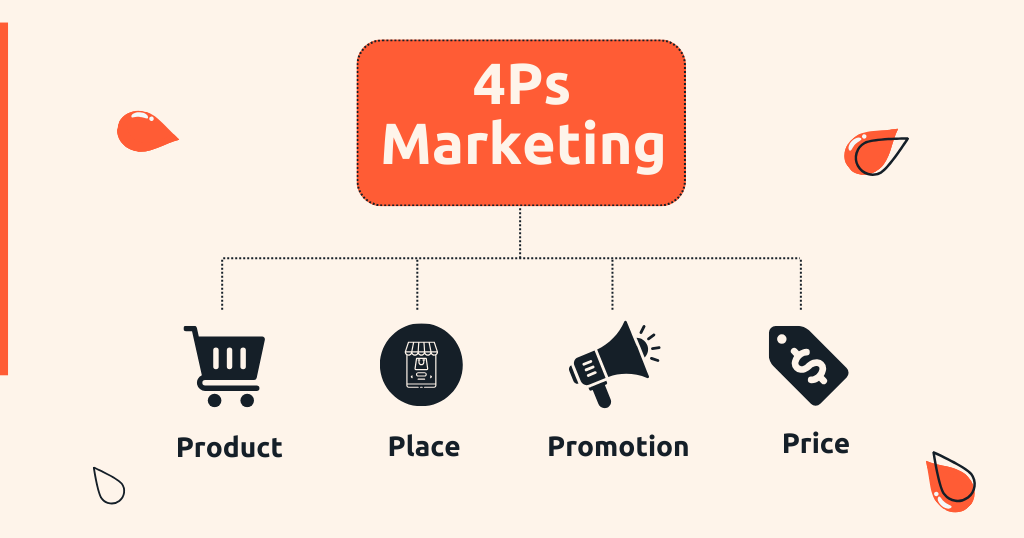
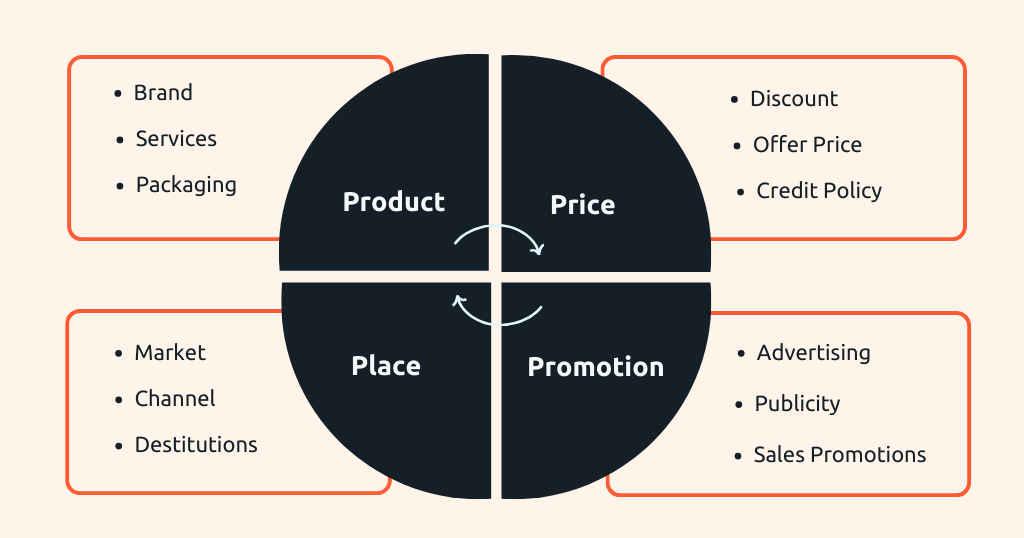
The 4 Ps are:
Product – What you’re selling, This is simply what you are offering for sale. It could range from physical items like electronics or clothing to services like consulting or housekeeping.
Price – How much it costs, It’s all about the money, baby! This is the price you’re charging for your goods or service. You have to make sure it’s just right – not too high to scare people away, and not too low to make them believe it’s rubbish.
Promotion – How people hear about your product (e.g., advertising), Think of this as spreading the message. How are you letting folks know about your fantastic products? You must spread the news in some way, whether through advertisements, social media, or good old-fashioned word-of-mouth.
Place – Where people can buy it (e.g., stores, platforms), This is all about where customers can get their hands on your products. Do you sell in-store, online, or through a fancy app? Whatever the situation, you must make it easy for people to find and purchase what you’re selling.
Having a great marketing strategy is critical for success. The 4Ps of marketing (Product, Price, Place, and Promotion) are a tried-and-true structure. Businesses that properly use these factors can create comprehensive marketing plans that engage with their target demographic and generate growth. In this post, we’ll look at how you can use the four Ps to improve your marketing strategy and reach your business goals.
Let’s explore Advanced Marketing Tools to Elevate Your Strategy.
So, marketing is no longer just about selling products. If you run a service-based business, things are a little different. You must keep your attention on the people you are serving and ensure their satisfaction at all times.
Aside from the traditional four Ps, we have three more to consider: people, process, and physical evidence.
People: These are the members of your team who engage with customers. They are the face of your firm, so make sure they are pleasant and helpful.
Process: It’s all about how you do things. You want to ensure that your service delivery runs smoothly and efficiently, and that your consumers are pleased with how things are going.
Physical Evidence: Think of this as the environment where your customers and your team meet. It could be your office space, your website, or even your logo. You want everything to look professional and welcoming.
Let’s talk about the 4Ps in detailed:
Tip: Any successful marketing strategy should be revisited from time to time. The marketing mix you create is not intended to be static. It needs to be adjusted and refined as your product grows and your customer base changes.
Product: Marketing strategies revolve around the product or service being given. Understanding your product’s distinct features, benefits, and value proposition is critical for successfully presenting it in the market. Conducting market research to uncover consumer requirements and preferences will allow you to design your product to match their needs. Furthermore, ongoing innovation and improvement of your product based on client input helps assure its relevance and competitiveness in the market.
2. Place: Price influences consumer perceptions and purchase decisions. Setting the appropriate price for your product necessitates careful evaluation of a number of aspects, including production costs, rival pricing, and perceived value. Pricing research and analysis can help you find the best price point for maximizing profitability while remaining competitive in the market. Implementing pricing techniques such as discounts, bundling, or value-based pricing can also help to increase the perceived worth of your product and attract new customers.
3. Price: Price is the amount of money consumers pay for a product or service. In business, price is one of the most important elements of the marketing mix, alongside product, promotion and place. Price should be carefully managed because it’s often used as a way to communicate value and quality in your brand.
When setting prices for your products or services, you have to consider:
How much does creating your product cost you?
What does your competition charge for comparable products/services?
Do they have higher or lower margins?
Are there any gaps in pricing that would allow you to enter those spaces successfully? For each brand, pricing research is crucial because it helps decide how much to charge for a product. One way to gauge this is to monitor the prices of your competitors and contrast them with your own, taking into account product kind and seasonality.
4. Promotion: The process of communicating your product or service to your target market is called promotion. It’s the manner in which your branding strategy is used to convey your message through physical and digital media. It can take many different forms; to name a few, there is direct marketing, public relations, sales promotion, personal branding, and advertising.
✅ Understanding the Origin of the 4Ps of Marketing
The 4Ps were created by E. Jerome McCarthy in 1960 who presented them within a managerial approach in his book “Basic Marketing: A Managerial Approach“. The book covered things like analysis, consumer behavior, market research, market segmentation, and planning. Philip Kotler popularized the approach and helped spread the 4Ps model.
There are several other approaches in marketing that are just as powerful and effective if you apply them correctly. First, let’s talk about the 5 Ps.
✅ 5 P’s of Marketing – Learn More About the Marketing Mix
Philip Kotler, a famous professor of international marketing at Northwestern University’s Kellogg School of Management, created this paradigm. He is also credited with making the marketing mix definition more widely accepted.
So, when we talk about the “people” part of the 5P’s, we’re really diving into the vibe, the service, how the employees carry themselves, and the whole experience they create. Think about it – whether you’re dealing with a service or buying a product, how the folks representing that company act and treat you can make a huge difference, right? It’s like the heart and soul of the business vibe.
✅ How did the 5Ps become the 7Ps of marketing?
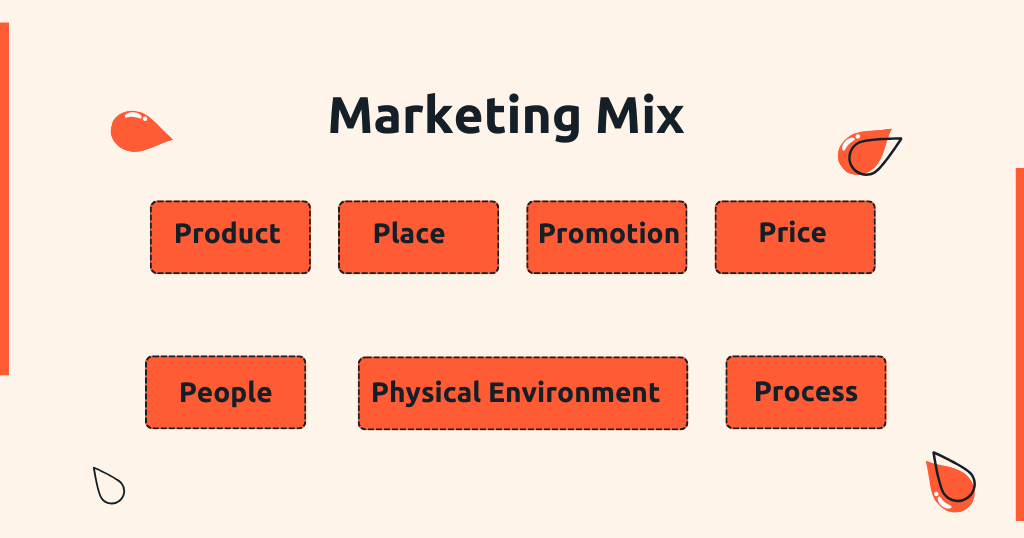
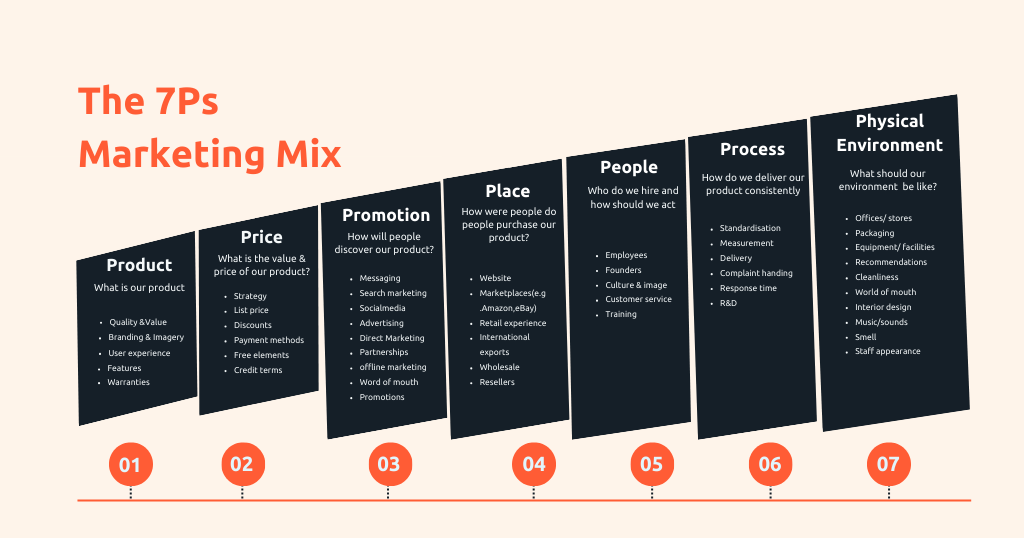
The 5 Ps of marketing worked for a while, but marketers eventually realized that the model did not cover all of the factors. In 1981, Booms and Bitner developed a 7-Ps modelthat included the original four aspects as well as three additional ones: people, process, and physical evidence (or physical environment).
✅ What are the 7Ps of marketing?
The 7Ps are known as the extended marketing mix and they are:
Product – Your product or service.
Price – How much you will charge for the product or service.
Place – Where you will sell your product or service (e.g., online, in a physical store).
Promotion – The way you advertise your products to get customers interested in buying them (e.g., social media posts and billboards).
People – The people who work for you, including managers and employees of your business (also known as stakeholders).
Process – Processes and systems that help run your business smoothly (often referred to as operations).
Physical evidence – the physical place where your brand exists (a store) or the environment where the actual purchase takes place.
✅ 7 Principles of Customer Service You Should Follow
There is an alternative approach to the 4 Ps that was suggested by Peter Bowman in his book “Service 7”. Bowman created something called the seven service marketing principles which include – value, business development, reputation, customer service, and service design. This framework is widely used in Australia.
✅ What are the 4 C model of marketing
Another prominent framework is known as the 4Cs of marketing, which stand for consumer, cost, convenience, and communication.
Consumer – Rather than focusing on the product, this approach concentrates on the consumer. This is where the brand would define their ideal consumer profile and devise successful marketing methods to develop and promote a product that addresses their difficulty.
Cost – Price is simply one element of the issue, and this approach considers the total cost of meeting a customer’s need. This could include the cost of time spent procuring the product, the cost of conscience from consuming it, and the cost of not choosing the competitor’s product.
Convenience – Brands are not confined to physical channels, and they may use a variety of channels in their digital marketing mix. These may include the product’s numerous platforms, digital stores, social media networks, and online distribution channels.
Communication – This final category shows a greater focus on the brand’s marketing tools and channels for communicating with customers. This could involve display commercials, public relations, personal selling, direct marketing, influencer marketing, and many other things.
Wrap Up!
The marketing mix is undeniably pivotal in driving business growth and maximizing ROI. While the traditional 7Ps framework remains invaluable, its applicability may vary across different business contexts. Before embarking on any marketing endeavor, it’s imperative to grasp the intricacies of your target audience. Tailoring your marketing strategy to meet their needs ensures relevance and effectiveness.
Now, let’s delve into the marketing mix. While it’s a valuable tool, it’s essential to acknowledge its limitations. Understanding your audience is paramount; without this insight, crafting a compelling marketing strategy becomes challenging. At Prime One Global, we recognize the complexities of navigating the marketing landscape. If you find yourself grappling with your marketing mix, fear not! Our experts are on hand to provide a Free Consultation and help refine your approach. Let’s collaborate to elevate your marketing strategy to new heights of success!
Nigetha
Nigetha Thurairajah, Senior Digital Marketing Manager for Partner's Growth at Prime One Global, Nigetha Thurairajah, Senior Digital Marketing Manager at Prime One Global, having more than 10 years of experience in Digital Marketing industry, specializing in Analytics and Conversion Rate Optimization. Skilled in Search Engine Optimization (SEO), Content Marketing, Analytics, Google Trends, Site Analysis, Web architecture, Competitor research and Keyword Research.
I am extremely passionate about public speaking and doing podcast 🙂
On the other hand, organizations have the need for integrating in IT departments new technologies often using cloud services and other ways of direct access to the web. This pressure for IT departments to give…
Maybe you are an Online Digital Marketer or a Blogger, Freelancer, Entrepreneur, Local Business Owner or from any other trade, but one thing will remain constant for everyone. You all need marketing. The effort and resources needed to market your products or services may be different. But, without marketing, there is no exposure and your business is bound to get stagnant at some point in time.
“Digital Marketing in 2016 is an investment that is done for the betterment of one’s Business”
I will be talking about essential marketing strategies that are never going to die, some that are going to be more useful than ever in 2016 and some that we need to leave behind because they will not work anymore.
Successful Entrepreneurs and Business Owners spend an average of 30 minutes a day on Business Education and Self Development.
That is a form of marketing. It is time invested in understanding the changes in your Demographics, Market Place and Key Performance Indicators of your Business.
Realizing the opportunities when you intelligently utilize today’s marketing channels like Social Media to build a long-lasting, relatable and profitable relationship with your customers in an entire community of referring fans for your business, is how you can excel at marketing.
2016 Marketing Channels To Avoid At All Costs
Vine, Foursquare and Swarm have died a silent and painless death in 2015. If you are using any of these channels, it might be a good time now to write it down and scratch these out of our routine. Blogging still remains a very important strategy. However, content with no strategy is not going to get you very far. Spend more time on planning out your content instead of randomly churning out articles for your business or getting them outsourced. Digital Marketing Trends continue to reveal that the use of Stock Images and Video footage has declined a lot last year itself. Consumers have seen it all, they want original and authentic feeds.
As Google and other email corporations become more stringent, ” sending a bunch of emails to your subscribers is not going to work either “ Instead you will need to focus on Email Automation and Personalization (more on this in the blog).
Banner Advertisements are on a decline too. There is a mobile movement going on for the past few years and the rise of smartphones is creating smarter consumers and creating more opportunities for smarter marketing. Consumers have become “banner blind”, so investing in banners is not a great idea unless you are already getting good results from a particular source.
Also, it might be high time to consider whether you need to allocate more funds to marketing your business on desktops vs. mobile environments.
THE MOBILE MOVEMENT STUDY
Over 2015, mobile search queries have skyrocketed to new heights. People search for everything from Travel Information to Product Reviews, Local Restaurants to random Trivia to become more knowledgeable.
While Word of Mouth and Display in Stores do lead to people to search for products on their smartphones…
…71% of consumers search for a product because they saw an advertisement.
4 out of 5 people take an action based on an advert they saw either on PC or on their Tablets and Phones. Mobile Advertisements are the new trend.
82% of Mobile Users notice mobile Advertisements. However, 79% of Top Advertisers still do not have a mobile-optimized website. It is more important than ever this year to provide your visitors with a good mobile experience. Don’t just check this box if you have a responsive website. It is important to check how your website functions on different browsers and different gadgets to get the most out of your time and resources spent on marketing. (You can contact me if you need help with creating a great mobile experience for your consumers).
Consumers today use a smartphone to keep updated, stay connected, for entertainment or to search for information on the go and obviously to make a smarter shopper. The shift is already happening, Don’t miss the mobile movement.
Here’s my list of the top 15 Latest Digital Marketing Trends for 2016
Re-targeting,
Promo Marketing,
Google Tag Manager,
Email Marketing (Automation and Personalization),
Marketing Automation,
Content Marketing (with a twist),
Buyer Follow-up Plan,
Search Engine Optimization,
Social Selling,
Conversion Rate Optimization,
Sideway Marketing,
Self-development and Business Education,
Podcasting (You read it right, people still listen to podcasts),
Google Ad Words PPC,
and YouTube Video Marketing.
This list is in no particular order. You may or may not have even heard about some of the ways, but if you find something interesting or questionable – Let me know through the comments section.
Now since you have a fair idea of what to expect inside this blog post, let us move into the details of each of the aforementioned tactics.
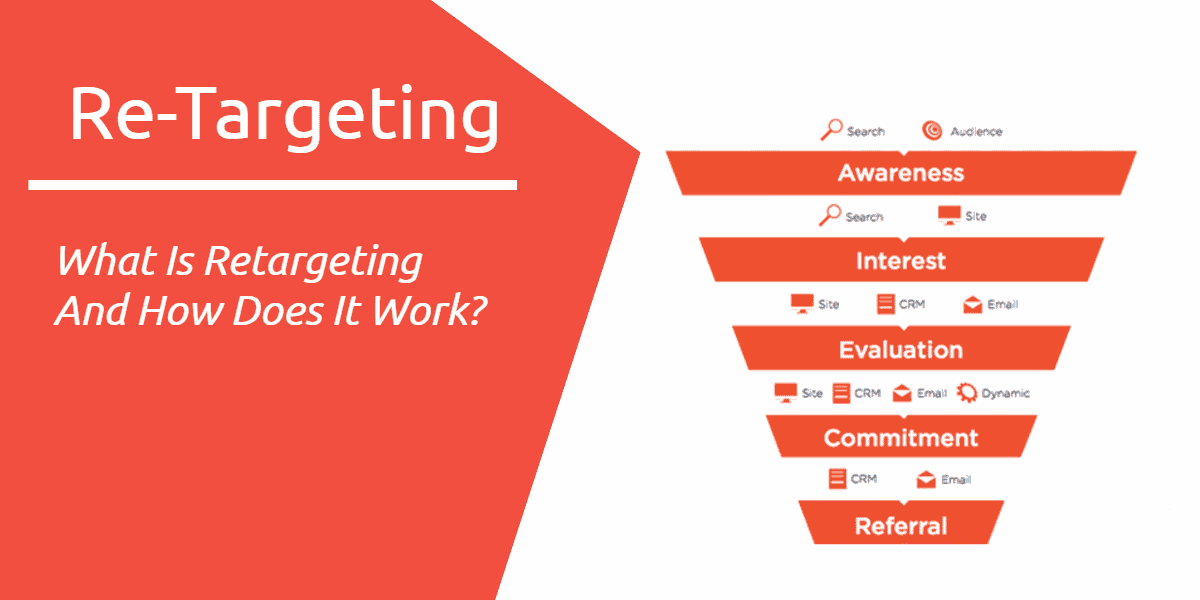
#1. RE-TARGETING / RE-MARKETING
Also known as “Pesky Salesman” Marketing. Re-targeting (Re-marketing) aims at balancing branding and direct response.
Since too much direct response can lead to consumer saturation and too much branding entails brand exposure without any direct correlation to an increase in sales, Re-targeting is a form of marketing that aims to balance both aspects of branding and direct response.
Re-targeting allows you to deliver certain value in advance and be assured that there will be a follow-up regardless of any contact detail or sale acquisition.
For Re-targeting to work, you need to ensure that you have great content. As sending users to landing pages related to content has lower costs than sending them directly to a product landing page, this method has an overall lower cost per lead.
Your first priority should be to build a pixeled audience. You can do this from either Google or Facebook, both are great in their own ways. Then remarket your products to only the pixeled audience which left your landing pages without converting.
Here is a very interesting read I came across on HubSpot about retargeting ideas. If you find the resource helpful, don’t forget to bookmark their page for future reference.
RE-MARKETING STORY
A quick look at Remarketing with Google AdWords and Analytics
Watchfinder, a premium, and pre-owned luxury watch retailer discovered that less than 1% of visitors were purchasing from their website. Since the average order value on their website was close to $3,500, the company found that buying decisions often spanned over a long period of time. Watchfinder’s challenge was to re-engage and converse with these users who had shown interest in the luxury watches to incite them to return to the website and make a purchase.
This is where re-marketing came into play. Once their remarketing campaign was properly set up and executed, they had a massive 1300% increase in ROI. Their average sales volume also increased by 13%.
Click here to read their full case study in detail.
#2. PROMO MARKETING CALENDAR
Don’t just look at the Promo Calendar as a list of days when your company blasts festive emails to all your subscribers. If planned in the right way, a Promo Marketing Calendar can help you reach your company milestones faster.
Here Are 6 Effective Ways of Using a Promotional Calendar
Break Larger Business Goals into Smaller Milestones
Create Success Checkpoints and Breach KPI’s
Set project Deadlines and Track progress
Understand How and When to Allocate Resources
Increase Brand Awareness Amongst Consumers
Increase Revenue From Your Email Marketing Lists
Keep the focus on your marketing plans first, and use the promotional calendar as a means to overcome the aforementioned objectives.
So, how can you go about creating the perfect promo calendar marketing plan?
Have you been using promo marketing for your business before? If so, take statistics of the last few years and narrow down on the promotions that worked and the promotions that failed. Once you have the list, you can focus on enhancing the promotions that worked for your business. Think of it as an immediate source for generating sales.
Write down a 12-month revenue goal that you plan on obtaining. Perfection is the key. You need to have something to work towards, but do not overlook your business milestones. Write down what you expect to achieve out of every promotion.
Now, create a list of holidays in your financial year and slot them into appropriate months. Here is an interesting resource that lists down all possible promotional holidays on the calendar. Source.
Jot down your slow and fast business months. Every business faces a down phase in the year. For example – Some businesses sell more on vacation time than others. Trying to heavy promote your business during slow months is only going to build resentment for your brand.
Categorize non-revenue and brand awareness generating goals separately.
These can be-
Blog Launch
Podcasts
Webinars
Books
Etc…
Keep seasonality in mind when plotting promotions since no business have even earnings all throughout the year. Always have a certainly expected figure for every promotion. That way, you can measure its success. If you fail to meet your expectations for any promotion, then carry forward the deficit to the next promotion. Keep going until the end of the year.
List all your additional requirements.
If you need to launch a new product/service
Acquire New Leads
Launch new campaigns
Create a more pixeled audience etc.
Use the Promo Calendar wisely, and incorporate other marketing tactics into it. There are endless combinations. Feel free to contact me if you need ideas on how to get started. Trying to focus on the entire calendar can be overwhelming to start with, focus on quarterly or half-yearly plans at first.
#3. GOOGLE TAG MANAGER
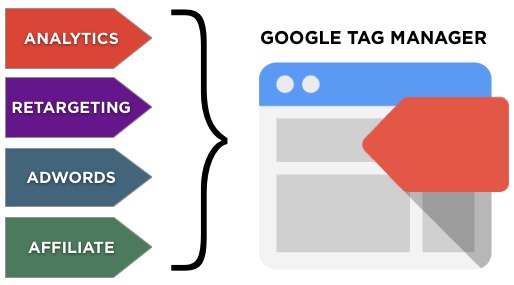
Imagine being able to see every single click that happens on your website??!? The Google Tag Manager not only allows you to do just that but is also very easy to set up. I am not going to show you how to set up GTM, but if you need help you can get in touch with me through the comments at the end of the post.
Refer to the Google Tag Manager as a Dashboard that helps marketers accomplish just about any goals related to marketing. Google Tag Manager does not replace Google Analytics, but it supercharges GA to an extent that the reports provided by analytics are much more detailed and useful.
Though the GTM has an extensive learning curve, the time you spend on setting up GTM will eventually add up in the long run. It makes it easy to place tracking pixels and scripts on various parts of your website like specific button clicks and page views.
As a beginner, you should stick to only tags and triggers in GTM, later on, as you gain more confidence you can start accessing the advanced data layers.
Email Marketing is not all about blasting your subscription lists with tons of emails throughout the day. In fact, if you are doing this you are not going to get any benefits at all. Email marketing in 2016 is more about automation and personalization.
Also, pay very close attention to what you write in your emails because that is the most important piece of copy you are going to write.
Take into consideration a very hypothetical situation –
Let’s say that you send out 10,000 emails that get a 10% open rate with another 10% of readers clicking on the link and 5% of them buying your product = 5 Sales.
Now if you just aim to improve your copy to double your open and link click rate – 10,000 emails that get 20% open rate and 20% link click rate and 5% buy = 20 Sales. Which is a direct 400% increase in sales just by writing a better email copy?
Here is a very interesting resource on writing great Email Subject Lines to boost your open rates.
Take notes on some of these positive keywords that boost email CTR:
Exclusive
Free Delivery
Gift
Latest
New
Sale
Alert
News
Video
Daily
Weekly
Editor
Update
Breaking
Limited
Review
Here are some negative words that you should cut immediately from your Email Subject Lines –
Use your emails to help your customers to work with you. Give them the information they need to interact with your brand. Use effective CTAs to incite them to take action.
Understand that change is a constant thing. If something is working today, it may not work tomorrow. Always keep testing. Your competitors are testing.
Learn new things and implement them yourself. Test and verify yourself.
#5. MARKETING AUTOMATION
Marketing Automation refers to software that aims to automate the goals of marketing. Especially, repetitive tasks like Emails, Social Media and other common website actions. Most marketers opt for it, try to set it up and leave it unfinished because the process is very overwhelming.
In simple terms marketing automation refers to software and tactics that help companies to have a buying cycle like big eCommerce websites. This helps them to encourage better brand communication with consumers and convert stuck-on-the-fence users into reliable and repetitive buyers of the business.
Problem with Marketing Automation
Most marketers live under the impression that marketing automation orbits all the essential marketing tools necessary for the growth of a business including lead generation software. This mere delusion leaves most marketers automating the middle of the funnel without any solution to generate new leads and create new business relationships.
Marketing Automation Case Study
Sixth Division built a $3MM Coaching and Services Business in 4 Years.
How do you say?
Solely with lead generation tactics and marketing automation.
Sixth Division acquired leads through four channels, namely –
Facebook
Google
Live Events
And partners
After acquiring leads, SixthDivision invited prospects to a Webinar. At the end of the Webinar, they showcased a single product for the prospects to buy. Once converted into buyers, SixthDivision had their entire follow-up plan automated.
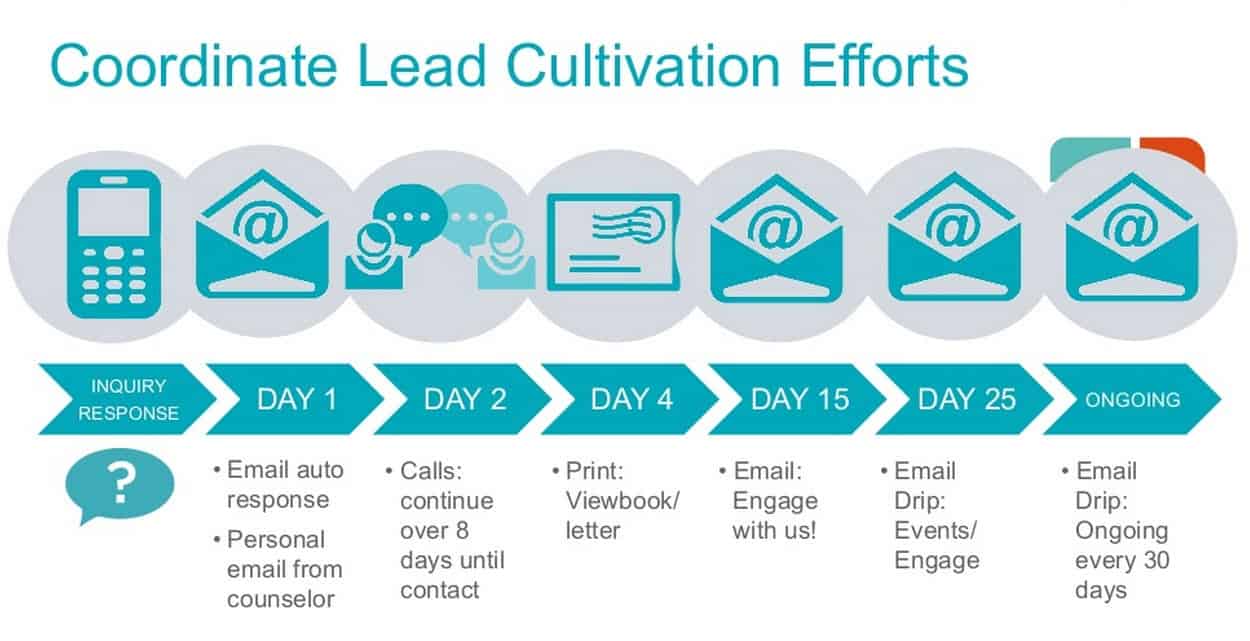
They sent out a Three Email Series to all buyers to schedule a consultation.
The first email was a video that introduced them to SixthDivision. This video confirmed the date of the consult and showed them what they could expect from the consult.
The second video was a simple reminder about the upcoming appointment. The Date and time were planted in three places – the Subject Line, picture and Closing Sentence.
The third email was a pre-consult message reminding them about things they should have ready before they take the call.
This simple and effective automated plan allowed them to scale their business seamlessly and grow it into a $3MM Coaching and Services business in 4 Years.
#6. CONTENT MARKETING
Content shall always be the king of the internet. Just that its ways are changing. Previously you could get away with an unplanned content strategy and still extract decent ROI out of your marketing campaigns, but now the rules of the game have changed.
As smartphones are enabling smarter users, people are becoming very particular about the kind of content they see in their news feeds. You can’t impress them with any random “tech-joe” talks. You need to have carefully researched data and plan to even invite them to click and reach your landing pages.
This calls for a twist in the tale and here is how you can go about it.
Break Your Longer posts into Shorter and Detailed Versions. Don’t give all your information away at once. This will lead to higher bounce rates on your website if you manage to get the clicks. Instead, focus on giving away beginner-friendly information in earlier blog stages and then move on to advanced information in the later stages.
The best way to go about is to publish one part every week. Unless users are really interested in whatever content you throw at them, focus on sending one informative post every week to their email. You can remind them throughout the week about your post, but avoid information overload at all costs.
Choose a post that worked well and enhance it. Add more information to it and update it. Once you update an old post you can publish it with a “More Information Title” or something similar and publish it again.
If you have a recurring post that can be updated periodically, make it a point to update it and republish it with a new title. Push the old content down and add the changes to the top of the post.
Google loves websites that keep updating their old posts. Sending signals that you have updated an older blog post will definitely entail more SEO benefits and traffic.
#7. EIGHT WEEK FOLLOW-UP PLAN
Starting from the moment a customer purchases their product, this is how it will look like….
First Week –
Focus solely on establishing a relationship with the customer. Give them a walkthrough of the product or a video guide and let them enjoy its benefits.
Second, Third and Fourth Week –
Focus solely on social proof by introducing them to other customers who have used your products. Show them testimonials on Social Websites and invite them to leave feedback themselves.
If you have an online community or forum, introduce them to it and ask other members to congratulate them on joining. Basically, establish a friendly rapport with them, not just a buyer and seller relationship.
Fifth, Sixth, Seventh and Eighth Week –
Start measuring your results. They have used your product for almost a month. Now it’s time for you to reach out to them and help them document it for you. Get even more testimonials and proof of results, reward those who keep the chain alive and continue to show new people the power of your products.
By doing these little things, you can save a lot of money and invest it into other marketing channels.
Keep in mind that your motive is the encourage advocacy of your brand. There is no way those customers are going to turn against you once you have been with them for the first sixty days and they have shared their unbiased testimonials with their followers on social platforms.
The more you can get people to use your products and share their experiences. The better chances you will have at convincing newer customers and showcasing them the power of your brand and that YOUR BRAND is THE SOLUTION TO ALL THEIR PROBLEMS.
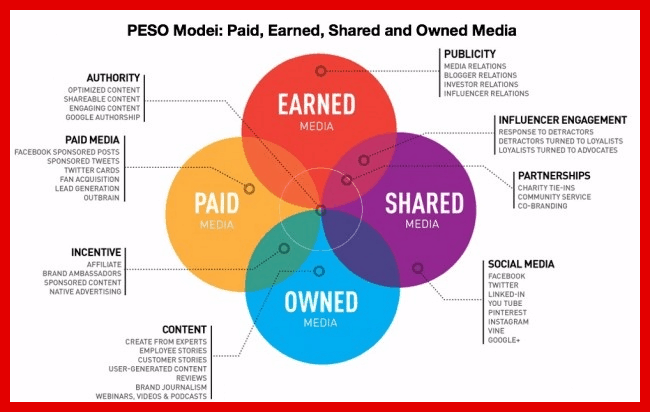
#8. SEARCH ENGINE OPTIMIZATION
Do not forget the power of earned media. Go to the Google Adwords Tool and do a search for your industry keyword.
If you are in the Fashion Industry, try searching for “Fashion” and the average bid should show you an estimate of what the keyword is worth in terms of clicks.
Likewise, you could be from the Makeup, Self-Development, Women Care, Beauty etc industry.
Now, let’s take a keyword that is worth $0.15 cents. If you are able to rank for that keyword and get at least 5.879 visitors a day from organic traffic. You are technically saving $881.85 a day for marketers who are advertising for that keyword. Now if you take into account the yearly expenses 881.85×365 = $321875.25 yearly. Magical isn’t it?
Always try to include an industry keyword in your domain name. This makes your chances of ranking in the long term a lot easier as compared to fully branded domain names.
Remember, Copywriting is the end all and be all of the marketing. It is present everywhere. Be it a 150 Character Tweet you want to promote, or a short AdWords Advertisement, the subject line of your business email or the content that goes onto your website and blogs. Always hire quality writers and better still, train and recruit them in-house.
What Are Possible Signals to Google That Your Page Rocks?
The CTR on your website – a number of clicks from your homepage to other internal pages of your website shows that visitors are interested in what you are sharing with them. So craft a good copy and CTA that gets clicks into the deeper inner pages.
Headlines play a very crucial role. Always keep testing your headlines. Remember the thumb rule of marketing – What is working today, will not work tomorrow. Your competitors are always testing, so should you.
The average time people spend on your page is also a key indicator of your website’s quality. The more the average time, the better your chances of ranking shall be in the eyes of Google.
Scroll Rates – Consumers cannot make a purchase if they cannot see the buy button. Ensure that your website copy incites users to scroll around and doesn’t have any blocking elements or irritating popups.
Use original photos and videos on your website as a means of keeping people engaged with your content for a longer period of time. Use long and in-depth videos to show customers more about your product and services.
Last but not the least, Grammar, Quality Links, Social Shares, Relevant Images, Captions, Author Authority etc, will help visitors stay on your page for a longer duration, decrease your bounce rates and increase your overall SEO score as well.
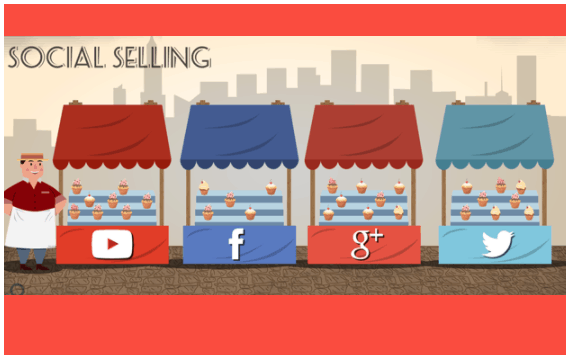
#9. SOCIAL SELLING
Let’s not talk about Facebook, Twitter, Pinterest or LinkedIn marketing separately. That is why I am putting all of these under one tab and we can call it “Social Selling.”
Before I get into the nitty-gritties of Social Selling, it is important to understand how a typical sales funnel looks like.
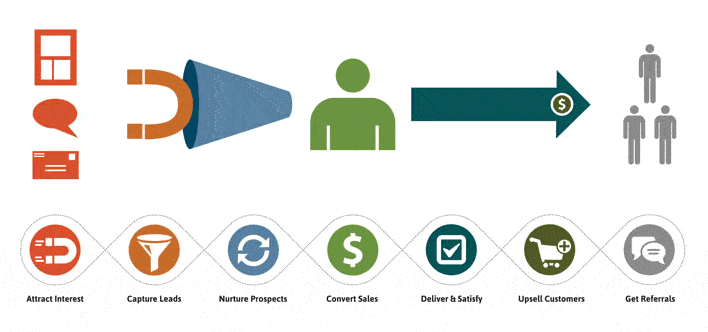
Lead Capture –> Sales Page –> Order Form –> Upsell –> Thank You
Don’t use social media as a platform to directly sell your products. Instead, focus on advancing the customers from one stage of the sales funnel to the other.
Brands that constantly try to sell directly to their pixeled audience increase churn and eventually burn their lists. People eventually become blind to their advertisements and promoted posts.
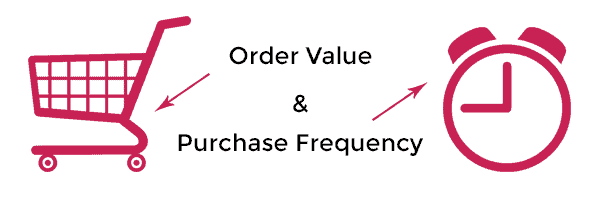
The aim of Social Selling should be to establish a rapport with your customers and increase purchase frequency by establishing continuity and credibility.
Use platforms like Facebook, Google+, Pinterest, Linked In and Twitter to build Likability and Trust amongst customers.
Start with Giving Value First and Establishing Credibility
Send visitors from Social Media to an Ungated Offer. It can be a Blog Post, Resources, Checklist, How-to Guide etc, but don’t ask for anything in return just about yet.
Alternatively,
You could also try sending them to a gated offer like White Paper, PDF Ebook Download etc, and try to get their emails first. Testing is the key here.
Alternatively,
You could offer them deep discounts on evergreen products, services or software. Use this technique if you are selling something that needs no introduction. For example – Digital Services like SEO, Copywriting, Explainer Video Creation etc. These services need no introduction, and there is already a heavy demand in the market for them.
The idea here is to use value first to drive traffic from Social Media to your website or platform.
Now, Embed Core Offers into Your Ungated Content
Plant an offer or propose a sale towards the middle or end of your content and try to convert them into buyers. Don’t go for your most expensive products, use cheap ones instead. The idea here is to make them swipe their cards and spend as little as a dollar towards your business. Just create a connection.
Or, Upsell Products from Deep Discounts
For every group of people who are willing to spend money to buy your products, there will be some people who can always spend more. The idea of Upsell offers is to aim at those customers and try to sell more from the 2nd stage of the funnel because they have already shown interest in purchasing your products.
Pixel and Retarget Customers Who Left from Funnel Stage One
Customers who clicked your promoted posts and went to your website were interested in what you had to share with them. Pixel those customers who leave from this stage and re-target other products that fall into the same interest category.
INCREASING BUY FREQUENCY AND REPEAT ORDERS
The mathematics is simple here. More than 70% of Customers turn to Social Media for after-sales service. If they get a reply, they are most likely to purchase from you again and become stable customers. If they do not get a reply, there is a 15% chance of them not placing any orders in future.
77% of customers say that valuing their time is the best way a company can provide better customer service.
So, ensure that you reply to all social messages within 12 hours and that resolution to customer’s problems is provided within 24 hours at all costs.
Use Social Listening Tools Effectively
Statistics report that more than 50% of customers do not tag the Brand when they are talking about it on Social Media. Thankfully, you have ways to eavesdrop on their conversations on Social Media. Use it effectively, and you can reach them right in the nook of time.
Hootsuite – an entry-level searchable tool that monitors your social media
Mention – a mid-level tool that monitors streams – listen for keywords
Radian6 – an enterprise-level tool to monitor social media
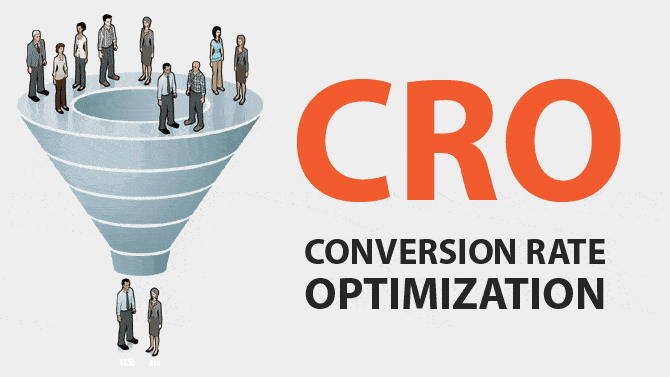
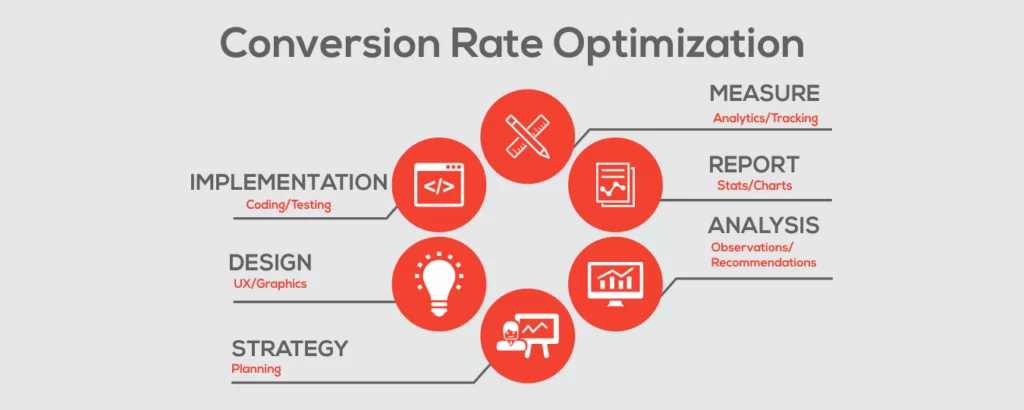
#10. CONVERSION RATE OPTIMIZATION
So, you are spending money on Facebook Advertisements, Google PPC, Retargeting, Offline Advertisements, Billboards etc, but have not allocated any resources on Conversion Rate Optimization?
You might be technologically challenged as an Entrepreneur, but if your I.T Department has not mentioned anything about optimizing the conversions on your website, it might be a good time to reconsider hiring the right guys.
Marketing is not about the number of visitors that come to your business, but it is about the number of visitors that convert into trusted and returning customers of your business.
So instead of focusing on driving new leads to your business, your focus should also be on improving the amount of “what-sticks-and-what-doesn’t” on your website. This is where Conversion Rate Optimization comes into play.
Resources:
InstaPage – create a landing page in just 3 minutes
Unbounce.com – build and test landing pages without I.T.
There are various tests you could be running on your website to Conversion Optimize it, here is my list of what’s really going to be on target in 2016
Conduct Offer Tests – like product bundling, visitor interest-targeted messaging, writing a benefits copy above the fold, offering discount coupons on website headers etc.
Geolocation Tests– Use of different images, wording and language according to Geolocation tests.
Personalization Tests – This is going to be a big one in 2016. More than 60% of marketers have called it the game-changer. It’s about personalizing who sees what and when.
Shopping Cart Recovery Tests and Email Reminders for Shopping Cart Abandonment
Button Color and Standard CTA Tests are also here to stay. (forever).
Lastly, do not forget to do mobile optimization tests. Mobile-Friendly Websites go way beyond the means of just responsive websites. You need to test how your website works and functions on different devices like Mobile, Phablets, Tablets, Laptops, Desktop Computers etc.
Also, plan different advertisements and content for different devices. For example – the banner ad you use for desktops might not gain the same traction on mobile devices. Your content strategy should differ according to the device.
#11. SIDEWAY MARKETING
When you do not have a huge marketing budget but your competition is stiff, it’s better to market your business sideways than to get into a head-on collision with your competitors (who can easily crush you).
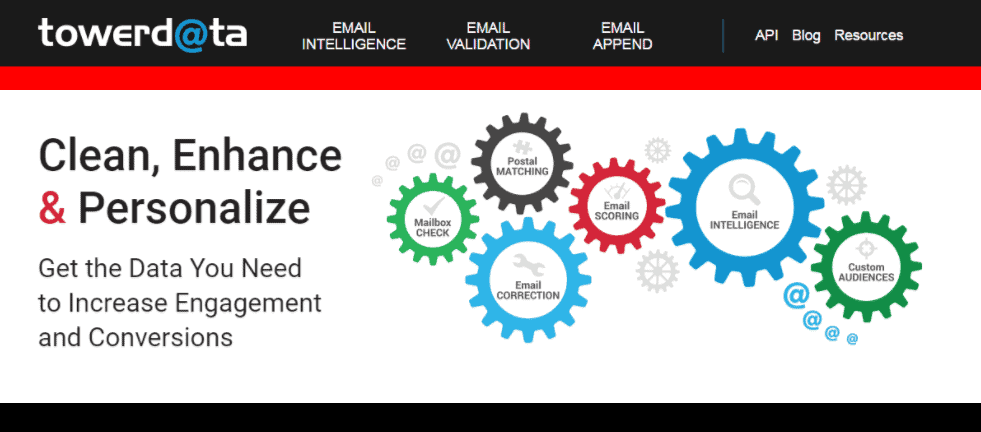
If you already have an Email Marketing Subscriber List, try running it through Towerdata.com
As soon as you scan your list on Towerdata, the website will give you age, gender, marital status, income, zip code and more of the people on your list. You will also get an overall snapshot of your market – length of residence, home market value, presence of children, charitable donors etc,
You can also collect purchase data and interest data from Towerdata.com. Once you have all the information in front of you, you can market your products and personalize your future emails, even more, to gain more traction from the email marketing list.
Apart from giving all the above information, Towerdata.com also gives you the net worth of leads.
When I ran a list of one of my Makeup and Beauty Industry clients on Tower data, it returned that more than 50% of the leads were high net worth.
But the cost of Beauty leads acquisition = $4.52/lead
So instead of buying Beauty leads, I bought 1000 Cosmetic leads for $0.69 each = $690 investment. Guess what? Women who were interested in cosmetics are bound to be interested in the Makeup and Beauty Niche. This way I not only acquired $4552 worth of Makeup and Beauty Leads (Immediate 650% ROI), with just $690 Investment. But also knew that at least 50% of the leads would be high net worth.
Can you see how this data can be used to sideway market your business to cheaper leads and still extract more than decent ROI from it?
Take for example the Golf Industry. You can venture into the Golf Niche, but sell products like properties, luxury cars, business loans etc., to those golfers. Because people in this niche and mostly affluent and have a classy taste for everything.
The core idea is to think of what people in your market are doing when they are not doing what you are selling. Think outside the box. Do You want to sell Insurance to people? But Insurance leads would cost you a massive $10-$18 per lead. Instead, search for Dog Lovers or Dog Breeds, which you can acquire for a few cents. Once you have that in place, try to get customers into your den with cheap tripwires like (Dog Tags and Dog Care Ebooks) and then Upsell them “Pet Insurance” once they opted for your Dog Tags. See what we did there? There is a simple science behind it, and this can be implemented in each and every industry.
#12. SELF DEVELOPMENT AND BUSINESS EDUCATION
Why is Self-Development and Business Education placed in the Top Digital Marketing Trends for 2016 you ask? Why shouldn’t it be? Marketing is an investment in any form that is done with the aim to grow your business in the long run. Marketing should add value to your business, and Self Development and Business Education thus is an important part of marketing.
I will repeat myself from the Introduction – Most successful entrepreneurs and business owners spend an average of 30 minutes a day on business education and self–development. While the majority of entrepreneurs shy away from the idea of personal development, strangely because they think that the idea of being a better person is silly or stupid.
We all want to be better individuals but we resist it because somehow the idea of facing all-out internal junk scares the hell out of us and we would rather give big speeches and take less responsibility than vice versa.
What we believe in, will set the stage for everything in our lives and will also determine the course of our expertise and experience. Successful entrepreneurship requires inculcating a set of beliefs that the majority of the people do not hold. Self-Development and Business Education will arm you to be better prepared for situations that normal people cannot handle. Like how to cope with business pressure during low volume months, or how to use negative publicity that your competitors do, in your favor.
All sorts of weird human tendencies sabotage our personal success. This is the subconscious mind and is not rational. We need to change our Self-sabotaging and Success Blocking Tendencies. Self-development can teach you how to cope with the fear of added responsibility, criticism, and failure. It will also teach you how to cope with success-blocking tendencies like Laziness, Procrastination. You do not want to become this perfect godly figure, but just a better version of yourself.
Think of it like this – Every minute you spend on self-development as an Entrepreneur will take away a dollar from your marketing efforts because, you are going to be making better decisions, managing your time effectively, and learning how to deal with stress, which is a critical progress killer.
Radio might be dead, but Podcasting is still a great form of marketing. People love media, especially if you are able to deliver it to them at their convenience. The art of direct marketing into your customer’s ears is one that needs a little bit of honing.
Finding your ideal voice is the most difficult part of Podcasting. You need to venture outside your comfort zone and find the right tone and setting for your Podcast.
Photo credit: Nicolassolop
Here are the basic tools that you need to start a Podcast –
Don’t aim to be a perfectionist when you first start Podcasting. Your initial Podcasts may not get as much attention as you think you deserve, but eventually, if you have the right mindset and deliver quality information, people are going to pile up and wait for you to release the next episode.
Use Podcasting as a storytelling tool. Don’t be a script nerd and read out from the paper. Just write down the points and be natural. People tend to understand when you are speaking naturally and when you are being superficial. They will lose interest if they find that you are reading from a script.
You can also invite other influencers into your Podcast and have a great discussion with them for everyone to hear. In this case, too, you need to ask the right question and avoid scripting of any sort.
You need to be consistent with your podcasts. Once you get frequent, people are going to wait for you to release the next episodes on time. If you don’t, they will get emotional and leave or think that you are just not too serious about the affair.
To find the ideal format for your Podcast, try releasing a few episodes at first and experiment in each. Then ask your audience which episodes they liked more than the others to narrow down on what’s going to work and what’s not going to work for you.
#14. GOOGLE ADWORDS PPC
1. Ad Messaging Enhancements
Earlier you were limited to a mere 95 Characters on PPC Ads, but now you can spice up your advertisements with a ton of Extensions and actually deliver more information to get targeted clicks.
Now, Ad Copy Writing for PPC is not just about the script. You need to carefully plan and design your advertisements, just like you craft your landing pages.
There are seven manual ad extensions to choose from. Click here to read more about them. Google has also included structured snippets, which is really cool.
2. Video Ads
Video Advertisements aren’t a new thing, but 2015 does seem like the year where they have been used extensively. 2016 is going to be no different. With Google incorporating the True View Video Advertisement campaign into AdWords, this trend is already on a hike.
Most marketers are adding these as the icing on the Cake, especially if their clients have a high budget.
This is an ideal time to exploit this strategy before it explodes in the near future.
3. RLSA (Remarketing List for Search Advertisements)
Though this feature was officially launched in 2013, most advertisers are still not using it. RLSA lets you effectively modify bids, search ads, keywords when past website visitors do a Google Search for products similar to yours.
You can initially review how customers are behaving on your website after clicking on your Ads. If the cost of acquisition of returning visitors is higher on your website, then you can lower the bid on search advertisements for first-time users.
Google Adwords is huge. There is more to it beyond these three important elements. But If you are starting out, focus on getting the first two points and later move on to other advanced options as you become comfortable
#15. YOUTUBE VIDEO AD MARKETING
More than 73% of Smart Phone enabled users to watch at least one video on YouTube every day. If that is not reason enough to get into Video Advertisements in 2016, then what is?
53% of viewers who watch a video get inspired or entertained.
70% of millennials use YouTube videos to learn something.
“How-to” searches are on a hike (70%) of total searches this year.
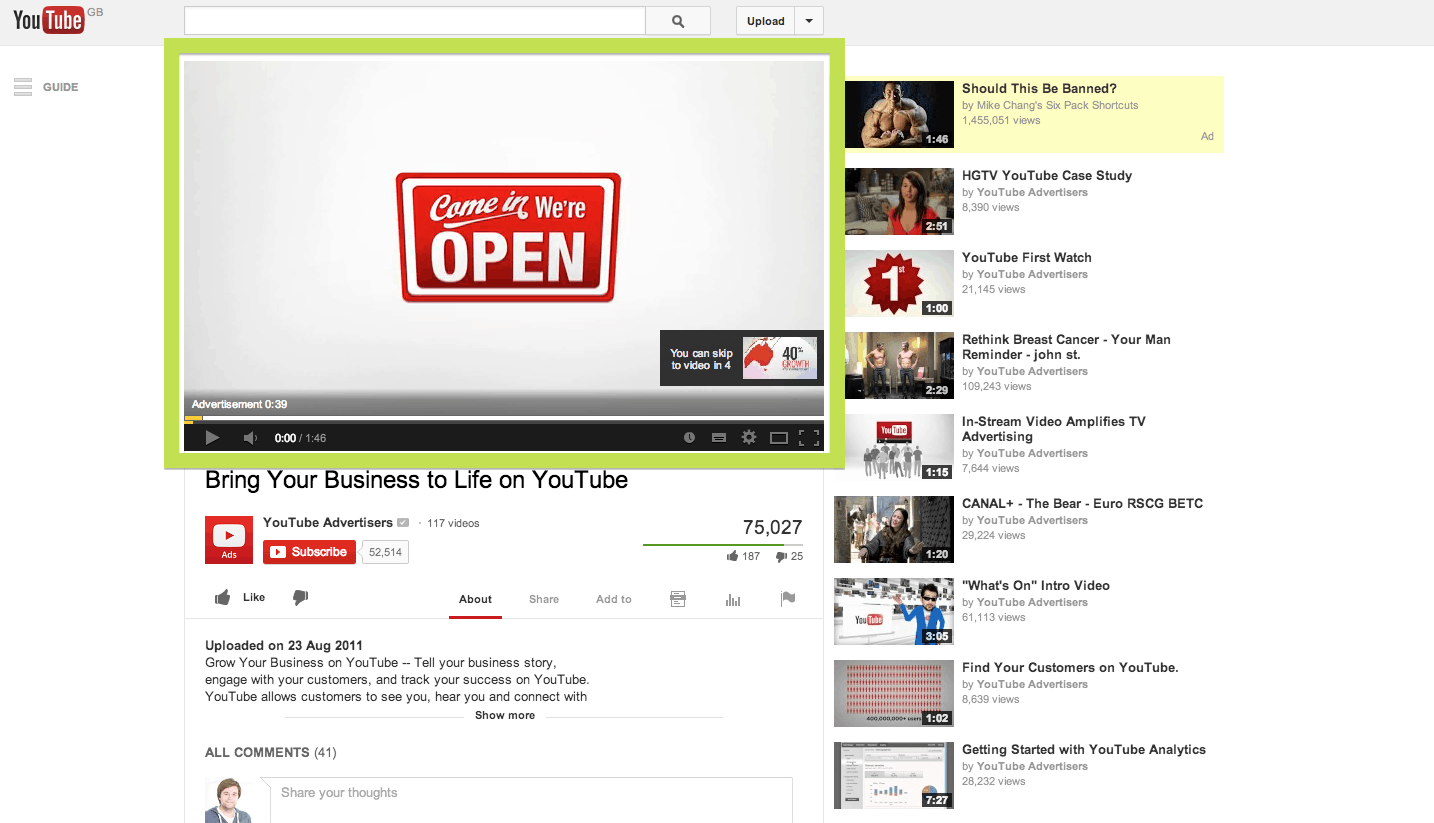
When viewers go on YouTube to watch a video, they see an advertisement on the right-hand side or a pre-video advertisement.
Most marketers do not get into video advertising for two primary reasons –
Starters Block – They do not know what to do.
Or, they do not know how to do it.
Videos allow you to get the right advertisements in front of the right people, at the right time.
Start by using Open Broadcaster Software – you can directly stream into YouTube, Vimeo, Twitch etc with CTAs and Keywords.
Start recording a video.
Use them as in-display advertisements (10 cents per viewer)
Link to your landing page
You can also do in-stream Ads(like the ones that play before a video, or ones that can be skipped in 5 secs).
To get the best results, your advertisements must be very engaging in the first 5 seconds.
You can also target your advertisements through videos. You can have them display on specific videos.
Use Retargeting to build lists of people who have already seen your video and get back in front of them. You can import Pixel from Facebook Campaigns and Google Adwords Campaigns. Video Advertisements are short, attention-grabbing and crisp. If you haven’t launched a video marketing campaign for your brand yet, it is time to reconsider your marketing efforts.
Closing Calls
As customers and marketers constantly evolve with the ever-changing technology, it is important for everyone to stay updated. At the end of the day, it is not about how many marketing tactics are you using for your business, but about how much you are extracting out of your marketing campaigns.
What is working today, might be considered old fashioned or outdated tomorrow. As a marketer, it is high time to understand that we cannot take anything for granted. What may have worked for us in the past, might hold no significant value today? Technology is not the only thing that is changing, our customers are evolving too and the way they choose to connect with our brands is evolving too.
“The only thing that remains constant is change.”
As you’re building your marketing plan for 2016, keep the “dying” trends in mind. Don’t count on what worked for you before but rather learn what has changed and come up with new ideas and new ways to leverage the technology at hand.
At Prime One Global, we understand that running a business can be overwhelming. On top of this, making time for self-development and staying updated with marketing tactics is not easy at all. That is why we keep updating our marketing skills in all spheres. Get in touch with me for a no-obligation, free consultation and I will have a Dedicated Marketing Manager from Prime One Global guide you on the ways you can market your business in 2016.
Have a good day!
Here is a list of Useful Resources, Tools and Software That Will Help You Become Better at Marketing Your Business
Competitor Research –
Datanyze.com– find different tools in various industries
BrightKite– Top product research platform for all caregivers with detailed reviews
BuiltWith – Find out what software and plugins your competitors are using
HotJar – create session recordings, improve form design, heat map, surveys and form analysis.
Google Analytics – Freemium Subscription, check traffic acquisition, Source, Referrals, Behaviors, Site Content Flow, Check Sessions by hour, Find best performing content etc.
CrazyEgg – Best heat map, scroll mapping, understand how people from different sources interact with your website
Grytics – Facebook Group Analytics and management. Find when members are most active, understand when to interact with them.
Onsite Remarketing / Retargeting
io – Social Shares, Contents, Giveaways, On-site Retargeting
OptiMonk – Contextual exit popups, hello bar, scroll pops etc.
LoadImpact – ton demand load testing for developers.
Feel free to get in touch with me about any of these tactics in the comments section below or you can also leave feedback on our official Facebook page. If you think I missed something out, let me know and I will add it to this post in near future.
Every day, more than 1 million websites go online – Do all of them attract a steady amount of traffic? No. In fact, more than 50% of these websites go out of business in the next six months, because they are unable to keep pace with the ever demanding search engine requirements.
It is hard for a website to flourish online without any search engine traffic, even if the business is providing a valuable service. There is substantial cost and effort involved in Search Engine Optimization for obvious reasons.
SEO takes a lot of time. Your website needs to get indexed, and then you need to keep updating it, do your reputation management, blogging, PR distribution, link building, social media management etc., and pray to god that your website moves up the rankings. Another big problem with newer websites is that they lack in metrics like PR (Page Rank), Trust Flow, Citation Flow, Domain Authority, Page Authority – all of which, can only be acquired over time. THIS IS WHERE PPC (Pay-Per-Click) Comes into play.
PPC through websites like Google, Bing, Facebook, Twitter and LinkedIn will bring targeted customers to your website based on the keywords that you select, immediately. Unlike SEO, you don’t have to wait for your website to rank first, before you start receiving any search engine traffic with PPC. Some of the best things about PPC are:
It is a cost effective form of marketing
It brings immediate results in the form of targeted customers
It is good for landing page testing, split testing, squeeze testing etc.
It can be tied up with great analytical tools to get better insight into customer models
A good campaign has the ability to pay for itself, time and time again
If a website is already ranking organically, then adding PPC ads to SERPs increases their customer retention by 89%
Top 3 sponsored links on Google get 43.7% clicks from search results
And lastly, PPC is a very precise form of marketing strategy that can be highly effective when executed properly because it can provide comprehensive information on cost per click and conversion rates, impressions, CTR and reach.
HOW TO SELECT THE RIGHT Pay-Per-Click Marketing Firm
The key attributes you want to check for in a good PPC Marketing Firm include:
Transparency – The rule of the thumb before selecting any marketing agency is to look for transparency. The marketing firm should be willing to share their expertise and information with you. You should be aware of what exactly is being done to your account and how it is being done. The lack of transparency of a firm is a clear indicator that the agents are not devoting as much time as they should to your campaigns, or they do not know what they are doing.
Expertise – PPC is a game that you get better at with more practice. So, ideally you would like to opt for a firm that has been in the industry for a very long time. The firm should be able to demonstrate some of their past case studies along with a portfolio of their past and present clients to showcase their depth of expertise in the PPC field. The PPC Agency, should at least dedicated one PPC Manager for your firm.
Control – This factor is somewhat similar to our first point. The Marketing agency should be willing to make you a part of their team, or become an extension of your business and work with your employees. You should always have the ability to retain control over your campaigns and make critical decisions based on your primary focuses, goals and in certain cases, even execute your campaigns under the supervision of the company.
When you have these basics clear, the next step is to underline a set of key questions for your ideal PPC Agency to answer about the qualified features that they will offer your firm in exchange for your money and trust.
Interrogating your potential PPC Firm about their experience, background and approach can be extremely beneficial maneuver. Do not select a firm on the basis of their outward appearance as, “All that glitters is always not gold.”
Here is a list of questions you should ask your to-be PPC Agency to help you get a clear grip on their approach, methodologies, understanding, transparency and level of expertise you can expect from them during your partnership phase:
How many years has your agency been doing PPC Marketing?
Are there any PPC Marketing Certifications or Degrees that you have acquired?
Can you give us a list of Past and Present Clients for whom your agency has been managing PPC?
How many dedicated PPC Managers do you have in-house? Do they only focus on PPC Management or other SEO Fields as well?
Does your firm offer other Digital Marketing Services like Enterprise SEO, Local SEO, Social Media Management, Web Design and Development? If so, what is the ratio of employees in those sectors and PPC?
Will your company be proactively sharing required reports with me on a timely basis? Can I demand certain hap-hazard reports so that I know what is happening with my money?
Has any of your PPC Managers had an experience with working with a company in my niche?
Do you only offer AdWords or other PPC platforms like Twitter, Facebook, LinkedIn, Bing etc. as well?
Can you show me a standard PPC Report that you provide? Will I be able to ask for other metrics on demand? Can you elaborate about the various metrics, which I can inquire about?
Do you use any standard tools or do you use proprietary tools to manage campaigns and generate reports? If I decide to leave your PPC Management Services in near future, will I be able to transition to another company with my existing campaigns and reports?
Will you agree to let my in-house staffs, handle certain parts of the PPC Campaigns, while your company handles the rest? How do you typically plan to synchronize my staff?
How to you determine the success of a PPC Campaign? How do you plan to go about making my business achieve its goals? Will you collaborate with me to understand the requirements of my business to refine my goals and increase the ROI?
Feel free to alter these questions to suit your requirements. Once you have found the right PPC Agency for your business, it is time to move onto the planning and execution of your PPC Campaigns, which calls for the –
[call_to_action image=”” title=”” btn_title=”Click Here To Download Your FREE 2015 PPC Checklist” btn_link=”https://www.primeone.global/wp-content/uploads/2015/10/The-Extreme-Google-Adwords-Pay-Per-Click-Checklist-2015.pdf” class=””]
Click on the link above to download the checklist for Google Adwords PPC. It contains modules that will help you setup a successful campaign and monitor it daily, weekly, bi-weekly and monthly to conversion optimize your campaigns and get the best ROI possible.
Be sure to bookmark this page and keep this handy PPC checklist in your mobile device for easy access. Connect with us on our Facebook Page or leave your feedback in the comments section below if you would like us to cover a checklist on other important forms of Marketing. Have a good day!
Making Future Forecasts With Present Statistics Of Sri Lanka
A tiny island country located in the middle of the mighty Indian Ocean, situated just below the Indian subcontinent, Sri Lanka has diverted the attention of the world towards itself, quite a few times in the past. The reasons may have been myriad – ranging from politics to ethical issues and the most delicate infrastructural, economic and social welfare growth to endemic natural resources. Let’s put all these facts aside for the moment and keep all our focus on the ongoing development of Sri Lanka in terms of Social, Infrastructural and Educational Interfaces.
It is always better to start with statistics, isn’t it? So this is what I accumulated…
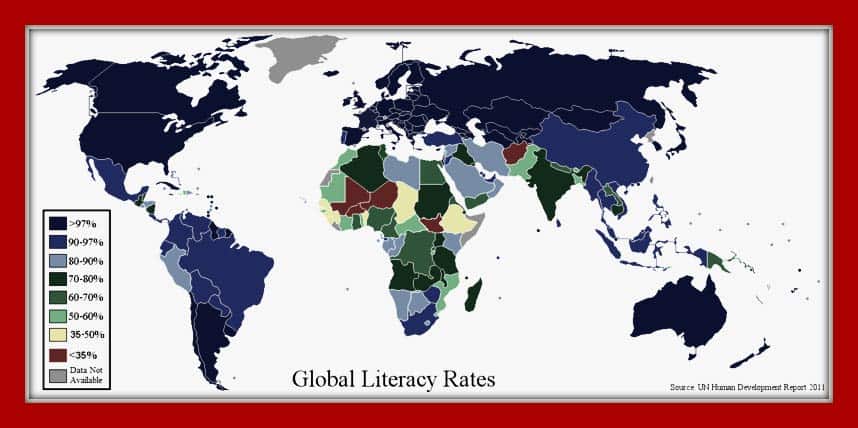
In 2014, Sri Lanka claims to have the highest literacy rate of 98.1% as compared to other developing nations which is extremely high. Take a look at the image given below which shows the country’s triumphant position in terms of the literacy rate as compared to its counterparts and other developing nations.
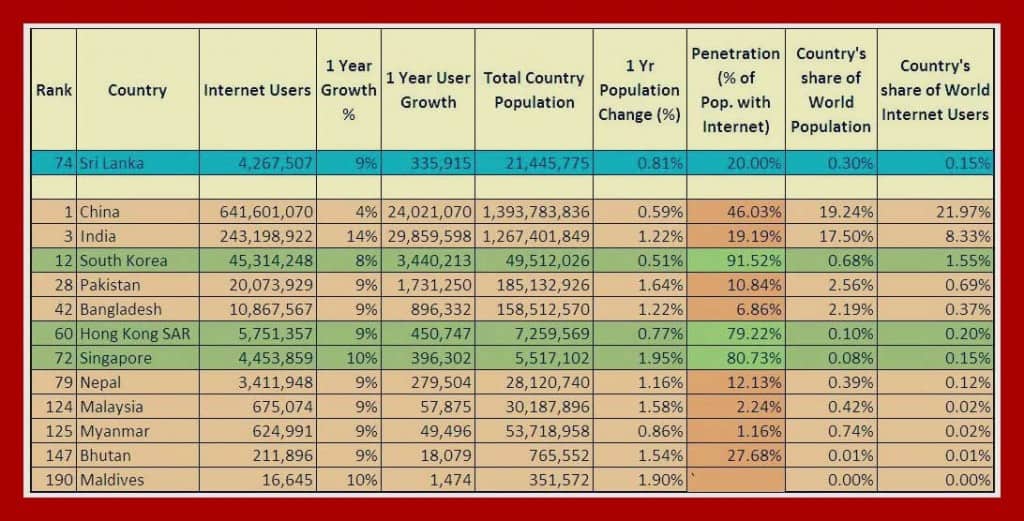
Sri Lanka boasts of a total population of 21 million. From these 21 million people only 20% have access to the internet and are using relative gadgets and utilities without interruption. Scrutinizing the Internet penetration rate of Sri Lanka, I deduct that it is well ahead of its counterparts in South Asia like India, Pakistan, The Maldives, Nepal, and Bangladesh etc. Bearing only a 0.81% of annual population growth, the country maintains an internet penetration growth rate of 9% annually (which is massive). However, this is not to be taken as a booster, but as a motivation to match the current internet penetration rate of Asian tigers like Singapore, South Korea, Taiwan and Hong Kong.
So much for the statistics, now let’s keep it aside for a moment. We deducted so far that around 20% of Sri Lanka has access to The internet – So what is this 20% up to?I try to unveil the trends, facts, and related marketing implications one by one – check it out.
Mobile Traffic
When I mentioned ‘revealing the facts,’ I wasn’t only referring to facts like Search engines, Browsers, Social Media Platforms and eCommerce etc. In Sri Lanka, electronic devices play a vital role when trying to figure the facts related to the digital reach of the country.
As per StatCounter (one of the largest web analytics services provider), Sri Lanka has surpassed the percentage of online access via desktop (43%) by a massive (57%) from mobile devices such as Smartphones, tablets, phablets etc. In other words, almost 2.5 million users access the internet by using mobiles in Sri Lanka. Back in July 2012, only 16% of Sri Lankans used mobile devices and 84% of them accessed the internet via desktops. Interestingly in the global context, desktops are still the major web traffic source with a whopping 65%.
Can this be taken as an indication that Sri Lankan businesses have to think differently? Consumers are looking for more convenience by using smartphones. When the internet is simply accessible from the pockets of the consumers, what are Marketers supposed to do?
Becoming Social
In contrast to what our grandparents know as being sociable, our generation is giving a new definition to being social. We are socializing with people even remotely while in front of our computers or mobiles. This may be a blessing or a curse, that’s up to each and every Sri Lankan to decide.
With approximate 2,300,000 users (not considering the fake profiles), which is about 11.5% of Sri Lanka’s total population, Facebook is outperforming any other Social Media platform in Sri Lanka. Interestingly as reported by Read Me, an IT online portal in Sri Lanka, there is 1,400,000 male users and 720,000 female users. From this 33% are within the age group of 25-34 years.
Though these latest trends in the Digital arena are becoming more and more ambivalent, let us consider them as opportunities and not complicate matters any further!So what are the marketing implications of these changing trends and growths in Sri Lanka?
Marketing Job Roles in Sri Lanka
The mammoth growth of the internet population of Sri Lanka does not mean you have to quit all your offline marketing efforts and focus only on online channels. Instead, the scenario is becoming complicated and the role of the Marketing personnel is now exigent. In the near future, it is expected that there will be no distinguishing between the roles of marketing staff as Traditional Marketer and Digital Marketer. Alternatively he / she should be able to merge both the channels, online and offline at the right ratio. A particular brand should be visible not only in smart phones, tabs, and desktops, but also equally it should be seen by the consumers in the newspapers, posters, direct mail, and such means. But the important thing that should be kept in mind is the marketing communication message that is to be seen by the potential consumers should be the same in both the channels, but appropriately adapted to the nature of the channel / device it is being communicated through.
Reaching the online population which is 20% at this moment is not enough for a business. It is important to reach the rest of the 80% who will also soon be a part of the ever growing Sri Lankan internet population.
The Websites and Marketing Campaigns
The thinking pattern of having two websites, one for desktop and one for mobiles is no longer even a valid thought. One unique website that the businesses are going to have should be mobile friendly. In the sense, it should not be responsive only for certain dimensions of smartphones. It should be a responsive website for tabs too.
As a consequent of the ever rising mobile users in Sri Lanka, redesigning your website itself or creating a Facebook fan page will not bring business. There are certain strategic movements that should be taken at a rapid pace just like how the internet is rising and mobile devices are influencing the users / consumers.
Similar to your offline marketing strategies like penetrating the market with a lower price, augmenting the product with value additions, distributing not only via own branded store but also through other retail outlets, promoting and positioning only one or two USPs despite all the features of the product, and much more, you have to decide on your strategy to enter the dynamic digital marketing fraternity too.
In most cases, it can be seen that brands with no proper strategic online marketing plans and contingency plans start ad-hoc online marketing campaigns and suffer from tarnished brand reputations.
You have to decide whether you are going to use online marketing as a mean of brand awareness only or as an additional income generating source or the sole selling platform. Depending on your objective your plans should vary adopting relevant online media channels.
Online marketing is not a “me-too product” where you simply copy what others do. Going “Digitalised” does not mean designing a website and creating a Facebook page anymore. Mind you, the efforts without adequate ROI are devastating!
Social Media Marketing in the Sri Lankan Context
It is widely prevalent that the brands who advertise / are active in Social Media profiles like Facebook and YouTube get offended at their marketing staff or agencies for not generating enough and more leads. They have to understand that Sri Lankans still show some degree of hesitation when it comes to making a purchase online. They widely use search engines and especially Social Media profiles to collect as much information as possible. Also, Social Media profiles may or may not work for the nature of your product. However social media profiles are the best in terms of creating and maintaining good rapport with your existing and future customers. Never expect money to flow from these platforms immediately. Instead distribute as much information about your brands as possible.
A recent survey done by Read Me shows surging results for the brands in Sri Lanka. 85% of the users are fans of local brands pages where a considerable 35% of them have liked more than 15 brand pages. Notably 45% of the respondents have responded that they would like to get information from these brands in their timeline. This is good news! Share your brand related message in a creative way for them to stop at your post while scrolling down in the timeline! Remarkably the survey also reveals that 78% of the respondents have admitted that they have been influenced by Facebook in making the purchase decision. Certainly this is great news for brands if this is true. The reason for mentioning “if it’s true” is we as Sri Lankans in most cases fail to reflect our real thoughts in surveys. 🙂
Online marketing is like a knife. You may cut multiple fruits and make a perfect fruit salad or you may end up in hurting yourself after all achieving nothing but getting hurt.